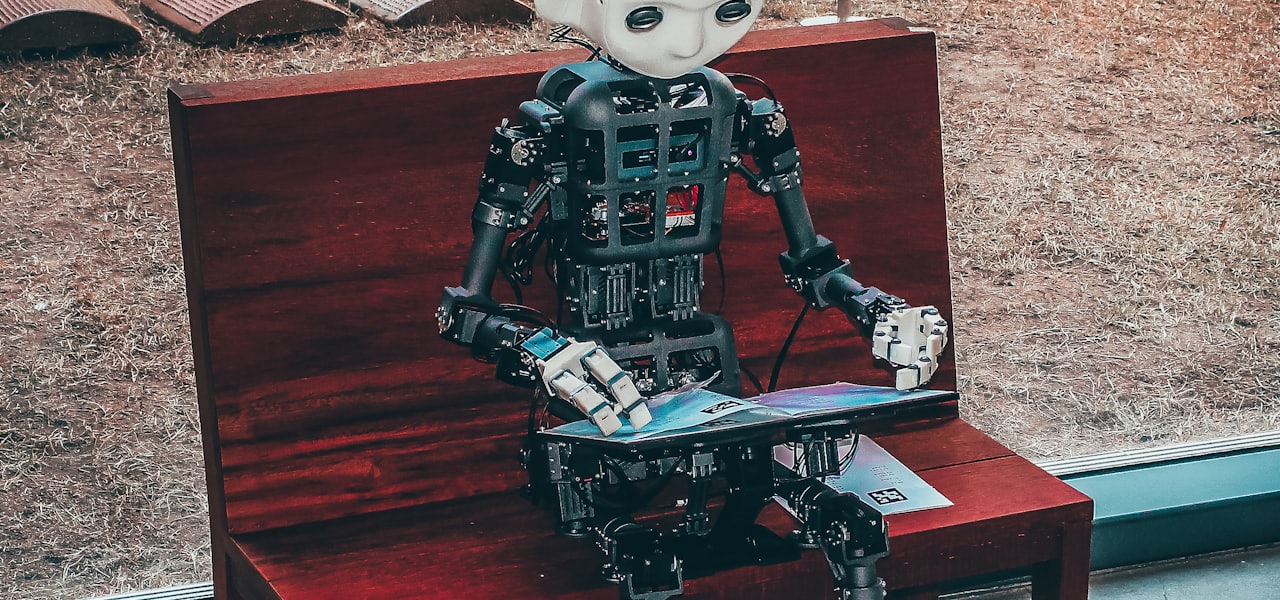
Big Mechanism is a $45 million DARPA research program, begun in 2014, aimed at developing software that will read cancer research papers, integrate them into a cancer model and frame new hypotheses by the end of 2017 through the automated collection of big data and integrating across various disciplines such as knowledge-based NLP, curation and ontology, systems and mathematical biology by reading research abstracts and papers to extract pieces of causal mechanisms. == Ras gene == The program focuses on mutations in the Ras gene family, which underlie some one-third of human cancers. Currently, a rough road map shows interaction sequences among proteins affecting cell replication and death. However, the causal relations are poorly understood. == Plan == The program is to occur in three stages. The first is to read literature and convert it into formal representations. Second is to integrate the knowledge into computational models. Third is to produce experimentally testable explanations and predictions. Research teams are developing four separate systems targeting all three tasks. In February 2015, an evaluation meeting reviewed progress on the first stage. Multiple tasks were considered. One was extraction of experimental procedure details and evaluating statements such as "we demonstrate" and "we suggest." Another worked to map sentence meaning and relationships. The best machine-reading system extracted 40% of relevant information from a small corpus and correctly determined how each passage related to the model. The second stage is to become active in summer 2015, when members attempt to produce a single reference model. The third stage is the most challenging, because the artificial intelligence community has had limited success at developing hypothesis generators. Molecular biology may be more amenable, because most domain knowledge is technical and available in written form.
GamePigeon
GamePigeon is a mobile app for iOS devices, developed by Vitalii Zlotskii and released on September 13, 2016. The game takes advantage of the iOS 10 update, which expanded how users could interact with Apple's Messages app. GamePigeon is only available through the Messages app, which allows players to start and respond to different party games in conversations. == Release == The app was first released on September 13, 2016, coinciding with the launch of iOS 10. The app was released for free, although it includes in-app purchases to unlock additional items, such as cosmetic skins, avatar items, new game modes, and an option to remove ads. == Games in the app == The following is a list of games that users can play within GamePigeon: Sources: Poker was one of the games included in GamePigeon at launch, although it has since been removed and is no longer listed on the game's App Store description. == Reception == GamePigeon has enjoyed commercial success, with VentureBeat noting that GamePigeon was ranked number-one in the "Top Free" category of the iMessage App Store, six months after its release. Critically, GamePigeon has been generally well received, being highlighted by online media publications early on shortly after the iOS 10 launch. It has since been included on many "best iMessage apps" lists. Based on over 162,000 ratings, the game holds a 4.0 out of 5 rating on the App Store. Julian Chokkattu of Digital Trends wrote "GamePigeon should be like the pre-installed versions of Solitaire and Minesweeper that used to come with older iterations of Windows." On its launch day, Boy Genius Report included it on a list of "10 of the best iMessage apps, games and stickers for iOS 10 on launch day." The Daily Dot wrote, "GamePigeon is easily the best current gaming option within iMessages." 8-ball and cup pong have been particularly well received by media outlets. The Daily Dot had specific praise for the app's billiards game: "8-Ball controls shockingly smoothly with your fingers, and there’s nothing quite like destroying a dear friend in poker." During his 2020 U.S. presidential campaign, Cory Booker was cited as playing the game with his family. In 2017, CNBC cited one teenager who expressed that GamePigeon was one of just a few reasons that those in her age range use the iMessage app. The game has received particular positive reception for allowing introverted individuals to exercise a form social activity; similarly, the game was highlighted as a way to maintain social distancing guidelines during the COVID-19 pandemic. As an April Fools' Day joke in 2020, The Chronicle, a Duke University newspaper, published that Duke's athletic program adopted GamePigeon's Cup Pong as an official varsity sport.
Circular thresholding
Circular thresholding is an algorithm for automatic image threshold selection in image processing. Most threshold selection algorithms assume that the values (e.g. intensities) lie on a linear scale. However, some quantities such as hue and orientation are a circular quantity, and therefore require circular thresholding algorithms. The example shows that the standard linear version of Otsu's method when applied to the hue channel of an image of blood cells fails to correctly segment the large white blood cells (leukocytes). In contrast the white blood cells are correctly segmented by the circular version of Otsu's method. == Methods == There are a relatively small number of circular image threshold selection algorithms. The following examples are all based on Otsu's method for linear histograms: (Tseng, Li and Tung 1995) smooth the circular histogram, and apply Otsu's method. The histogram is cyclically rotated so that the selected threshold is shifted to zero. Otsu's method and histogram rotation are applied iteratively until several heuristics involving class size, threshold location, and class variance are satisfied. (Wu et al. 2006) smooth the circular histogram until it contains only two peaks. The histogram is cyclically rotated so that the midpoint between the peaks is shifted to zero. Otsu's method and histogram rotation are applied iteratively until convergence of the threshold. (Lai and Rosin 2014) applied Otsu's method to the circular histogram. For the two class circular thresholding task they showed that, for a histogram with an even number of bins, the optimal solution for Otsu's criterion of within-class variance is obtained when the histogram is split into two halves. Therefore the optimal solution can be efficiently obtained in linear rather than quadratic time. == References and further reading == D.-C. Tseng, Y.-F. Li, and C.-T. Tung, Circular histogram thresholding for color image segmentation in Proc. Int. Conf. Document Anal. Recognit., 1995, pp. 673–676. J. Wu, P. Zeng, Y. Zhou, and C. Olivier, A novel color image segmentation method and its application to white blood cell image analysis in Proc. Int. Conf. Signal Process., vol. 2. 2006, pp. 16–20. Y.K. Lai, P.L. Rosin, Efficient Circular Thresholding, IEEE Trans. on Image Processing 23(3), 992–1001 (2014). doi:10.1109/TIP.2013.2297014
Fatpaint
Fatpaint is a free, online (web-based) graphic design and desktop publishing software product and image editor. It includes integrated tools for creating page layout, painting, coloring and editing pictures and photos, drawing vector images, using dingbat vector clipart, writing rich text, creating ray traced 3D text logos and displaying graphics on products from Zazzle that can be purchased or sold. Fatpaint integrates desktop publishing features with brush painting, vector drawing and custom printed products in a single Flash application. It supports the use of a pressure-sensitive pen tablet and allows the user to add images by searching Wikimedia, Picasa, Flickr, Google, Yahoo, Bing, and Fatpaint's own collection of public domain images. The completed project can be saved on Fatpaint's server or locally. Fatpaint is affiliated with Zazzle, and owned by Mersica (also the developer of MakeWebVideo). == History == Fatpaint was launched in May 2010, after five years of development by Danish-Brazilian software developer, Mario Gomes Cavalcanti. After his departure, he was involved in the development of two of Denmark's most visited websites and is responsible for developing and running Fatpaint. Partner Kenneth Christensen mastered assembler and graphics programming on the Amiga computer. He spent years with Mario on the Amiga demo scene. According to the CEO, Kenneth helped him with the Linux servers while he handled the development, administration, promotion, video production, testing and content. The founder of Fatpaint also created "Make Web Video" (or Video Maker), a web application for creating video presentations for business, families and individuals. Video Maker allows users to give out the videos for personal or business use in a simple and affordable way. == Tools == Fatpaint provides free online logo maker, graphic design, vector drawing, photo editor and paint design in English, Danish and Portuguese. === Photo Editor === Users can change photo colours by manipulating R, G, B and A channels, saturation, contrast, brightness, hue, gamma, sharpness, tint and RGBA matrix. Users can also remove unwanted background and other artifacts by using the paint tools with added effects or by cloning. Multiple photos can be combined into a single image. Users can pick different blend modes and multiple layers. Users can also extract or change parts of the photo by cropping, resizing, skewing, bending, distorting and rotating in 2D and 3D. Hence, users' graphics can be printed on custom products that can be bought and sold for personal and business purposes. === Vector Drawing === Users can choose from 5000 vector images or draw vector graphics and art from scratch, using Fatpaint's vector shape creation tools. It also provides advanced symmetric vector transformation in 2D and 3D, as well as support for colour gradients. Multiple drawings can be combined to form complex vector shapes. Different blend modes and effects are supported. Vector drawings can be cropped, resized, skewed, distorted and rotated in 2D and 3D. Similar to Fatpaint's photo editor, vector graphics can be displayed on custom printed products that can be purchased and sold by the users for personal or business uses. === Paint Design === Fatpaint has full support for Pen Tablets and users can pick pen, brush, airbrush, paint bucket, clone painting, eraser and smudging tools. Fatpaint offers 8 palettes for painting, plus 13 palettes when clone painting. Fatpaint allows users to import or create their own brushes and thousands of free clipart drawings and brush sets that have dynamic brushes, effects and blend modes. Paintings can be combined in different layers and objects. Similarly, paintings can be cropped, resized, skewed, bent, distorted and rotated in 2D and 3D. Moreover, the graphics can be displayed on custom printed products, which users can buy or sell for personal or business uses. == Top Features == 3D Text objects: Create photorealistic, ray-traced 3D text logos and images. Image objects: Paint on multiple layers, import or create your own brushes, clone painting, and painting with effects. Vector drawing objects: Create vector images using multiple paths. Rich text objects with 981 fonts. Effect objects: Blur, Drop Shadow, Glow, Gradient Glow, Bevel, Gradient Bevel, Color manipulations. Page layout: Create multiple pages with a size limit of 64 megapixels, and arrange graphical objects on created pages (each object can be up to 7.8 megapixels in size). Nest graphical objects and transform them into 2D and 3D. Skew, bend and distort images and text. Design, purchase and sell custom-printed products. Fatpaint can send the projects to a printing company. Supports pressure-sensitive pen tablets. Fonts, public domain images, cliparts, and brushes. == Compatibility == Fatpaint supports Firefox, Google Chrome, Opera, and Internet Explorer with cookies and JavaScript enabled. Other browsers may not work correctly due to their support of Java Applets. Fatpaint requires Adobe's Flash 10 or newer and Sun's Java 6 or newer. It is recommended to run on Windows 7 and on Apple and Linux if Java has been disabled. The editor only works on Firefox on Linux. Java and Flash integration do not work on Linux and Apple browsers. WikiMedia search is disabled on those browsers. Fatpaint works best with at least 2 GB RAM and 1 GB video memory, as well as a decent graphics card.
Deconvolution
In mathematics, deconvolution is the inverse of convolution. Both operations are used in signal processing and image processing. For example, it may be possible to recover the original signal after a filter (convolution) by using a deconvolution method with a certain degree of accuracy. Due to the measurement error of the recorded signal or image, it can be demonstrated that the worse the signal-to-noise ratio (SNR), the worse the reversing of a filter will be; hence, inverting a filter is not always a good solution as the error amplifies. Deconvolution offers a solution to this problem. The foundations for deconvolution and time-series analysis were largely laid by Norbert Wiener of the Massachusetts Institute of Technology in his book Extrapolation, Interpolation, and Smoothing of Stationary Time Series (1949). The book was based on work Wiener had done during World War II but that had been classified at the time. Some of the early attempts to apply these theories were in the fields of weather forecasting and economics. == Description == In general, the objective of deconvolution is to find the solution f of a convolution equation of the form: f ∗ g = h {\displaystyle fg=h\,} Usually, h is some recorded signal, and f is some signal that we wish to recover, but has been convolved with a filter or distortion function g, before we recorded it. Usually, h is a distorted version of f and the shape of f can't be easily recognized by the eye or simpler time-domain operations. The function g represents the impulse response of an instrument or a driving force that was applied to a physical system. If we know g, or at least know the form of g, then we can perform deterministic deconvolution. However, if we do not know g in advance, then we need to estimate it. This can be done using methods of statistical estimation or building the physical principles of the underlying system, such as the electrical circuit equations or diffusion equations. There are several deconvolution techniques, depending on the choice of the measurement error and deconvolution parameters: === Raw deconvolution === When the measurement error is very low (ideal case), deconvolution collapses into a filter reversing. This kind of deconvolution can be performed in the Laplace domain. By computing the Fourier transform of the recorded signal h and the system response function g, you get H and G, with G as the transfer function. Using the convolution theorem, F = H / G {\displaystyle F=H/G\,} where F is the estimated Fourier transform of f. Finally, the inverse Fourier transform of the function F is taken to find the estimated deconvolved signal f. Note that G is at the denominator and could amplify elements of the error model if present. === Deconvolution with noise === In physical measurements, the situation is usually closer to ( f ∗ g ) + ε = h {\displaystyle (fg)+\varepsilon =h\,} In this case ε is noise that has entered our recorded signal. If a noisy signal or image is assumed to be noiseless, the statistical estimate of g will be incorrect. In turn, the estimate of ƒ will also be incorrect. The lower the signal-to-noise ratio, the worse the estimate of the deconvolved signal will be. That is the reason why inverse filtering the signal (as in the "raw deconvolution" above) is usually not a good solution. However, if at least some knowledge exists of the type of noise in the data (for example, white noise), the estimate of ƒ can be improved through techniques such as Wiener deconvolution. == Applications == === Seismology === The concept of deconvolution had an early application in reflection seismology. In 1950, Enders Robinson was a graduate student at MIT. He worked with others at MIT, such as Norbert Wiener, Norman Levinson, and economist Paul Samuelson, to develop the "convolutional model" of a reflection seismogram. This model assumes that the recorded seismogram s(t) is the convolution of an Earth-reflectivity function e(t) and a seismic wavelet w(t) from a point source, where t represents recording time. Thus, our convolution equation is s ( t ) = ( e ∗ w ) ( t ) . {\displaystyle s(t)=(ew)(t).\,} The seismologist is interested in e, which contains information about the Earth's structure. By the convolution theorem, this equation may be Fourier transformed to S ( ω ) = E ( ω ) W ( ω ) {\displaystyle S(\omega )=E(\omega )W(\omega )\,} in the frequency domain, where ω {\displaystyle \omega } is the frequency variable. By assuming that the reflectivity is white, we can assume that the power spectrum of the reflectivity is constant, and that the power spectrum of the seismogram is the spectrum of the wavelet multiplied by that constant. Thus, | S ( ω ) | ≈ k | W ( ω ) | . {\displaystyle |S(\omega )|\approx k|W(\omega )|.\,} If we assume that the wavelet is minimum phase, we can recover it by calculating the minimum phase equivalent of the power spectrum we just found. The reflectivity may be recovered by designing and applying a Wiener filter that shapes the estimated wavelet to a Dirac delta function (i.e., a spike). The result may be seen as a series of scaled, shifted delta functions (although this is not mathematically rigorous): e ( t ) = ∑ i = 1 N r i δ ( t − τ i ) , {\displaystyle e(t)=\sum _{i=1}^{N}r_{i}\delta (t-\tau _{i}),} where N is the number of reflection events, r i {\displaystyle r_{i}} are the reflection coefficients, t − τ i {\displaystyle t-\tau _{i}} are the reflection times of each event, and δ {\displaystyle \delta } is the Dirac delta function. In practice, since we are dealing with noisy, finite bandwidth, finite length, discretely sampled datasets, the above procedure only yields an approximation of the filter required to deconvolve the data. However, by formulating the problem as the solution of a Toeplitz matrix and using Levinson recursion, we can relatively quickly estimate a filter with the smallest mean squared error possible. We can also do deconvolution directly in the frequency domain and get similar results. The technique is closely related to linear prediction. === Optics and other imaging === In optics and imaging, the term "deconvolution" is specifically used to refer to the process of reversing the optical distortion that takes place in an optical microscope, electron microscope, telescope, or other imaging instrument, thus creating clearer images. It is usually done in the digital domain by a software algorithm, as part of a suite of microscope image processing techniques. Deconvolution is also practical to sharpen images that suffer from fast motion or jiggles during capturing. Early Hubble Space Telescope images were distorted by a flawed mirror and were sharpened by deconvolution. The usual method is to assume that the optical path through the instrument is optically perfect, convolved with a point spread function (PSF), that is, a mathematical function that describes the distortion in terms of the pathway a theoretical point source of light (or other waves) takes through the instrument. Usually, such a point source contributes a small area of fuzziness to the final image. If this function can be determined, it is then a matter of computing its inverse or complementary function, and convolving the acquired image with that. The result is the original, undistorted image. In practice, finding the true PSF is impossible, and usually an approximation of it is used, theoretically calculated or based on some experimental estimation by using known probes. Real optics may also have different PSFs at different focal and spatial locations, and the PSF may be non-linear. The accuracy of the approximation of the PSF will dictate the final result. Different algorithms can be employed to give better results, at the price of being more computationally intensive. Since the original convolution discards data, some algorithms use additional data acquired at nearby focal points to make up some of the lost information. Regularization in iterative algorithms (as in expectation-maximization algorithms) can be applied to avoid unrealistic solutions. When the PSF is unknown, it may be possible to deduce it by systematically trying different possible PSFs and assessing whether the image has improved. This procedure is called blind deconvolution. Blind deconvolution is a well-established image restoration technique in astronomy, where the point nature of the objects photographed exposes the PSF thus making it more feasible. It is also used in fluorescence microscopy for image restoration, and in fluorescence spectral imaging for spectral separation of multiple unknown fluorophores. The most common iterative algorithm for the purpose is the Richardson–Lucy deconvolution algorithm; the Wiener deconvolution (and approximations) are the most common non-iterative algorithms. For some specific imaging systems such as laser pulsed terahertz systems, PSF can be modeled mathematically. As a result, as shown in the figure, deconvolution of the modeled PS
Augment (app)
Augment is an augmented reality SaaS platform that allows users to visualize their products in 3D in real environment and in real-time through tablets or smartphones. The software can be used for retail, e-commerce, architecture, and other purposes. Augment created a mobile app of the same name, used to visualize 3D models in augmented reality and a web application called Augment Manager for 3D content management. The company is based in Paris, France, and was founded in October 2011 by Jean-François Chianetta, Cyril Champier, and Mickaël Jordan. In March 2016, Augment announced €3 million in its series-A round from Salesforce Ventures, which bringing the total funding since launch to $4.7 million. Augment lets businesses and 3D professionals visualize projects in their actual size and environment, on iPhone, iPad, and Android, using the power of augmented reality. Users can print the Augment tracker or create their own tracker to place the 3D models in space and at scale in real time. Common uses of the technology include product presentations, interactive print campaigns and e-Commerce product visualization. Augment has just released its augmented reality SDK solutions for retail and augmented commerce. The SDK solutions, available for both native mobile app and web integrations, allow companies to embed augmented reality product visualization in their existing eCommerce platforms. == Technology == Augment uses the following 3D technologies: Vuforia Augmented Reality SDK OpenGL == Customer cases == Companies such as Coca-Cola, Siemens, Nokia, Nestle, and Boeing are using Augment's solutions. == History == Augment was first created by Jean-François Chianetta in October 2011. Chianetta later teamed up with Cyril Champier and Mickaël Jordan for further development. The co-founding team was among the 12 startups of Season 3 of French accelerator Le Camping. The team raised one million euros (US$1,300,000) in April 2013 and moved its office to Paris. In March 2016, Augment raised US$3M Series A funding from Salesforce and other investors. In 2013, Augment's first service, Boost Business Catalog, was made available to help businesses catalogue and display their product models. Customers can rotate the images in 3D and view augmented content before deciding what to buy. == Awards == "Best Innovation" at Ecommerce Mag Trophy 2013
Color image pipeline
An image pipeline or video pipeline is the set of components commonly used between an image source (such as a camera, a scanner, or the rendering engine in a computer game), and an image renderer (such as a television set, a computer screen, a computer printer or cinema screen), or for performing any intermediate digital image processing consisting of two or more separate processing blocks. An image/video pipeline may be implemented as computer software, in a digital signal processor, on an FPGA, or as fixed-function ASIC. In addition, analog circuits can be used to do many of the same functions. Typical components include image sensor corrections (including debayering or applying a Bayer filter), noise reduction, image scaling, gamma correction, image enhancement, colorspace conversion (between formats such as RGB, YUV or YCbCr), chroma subsampling, framerate conversion, image compression/video compression (such as JPEG), and computer data storage/data transmission. Typical goals of an imaging pipeline may be perceptually pleasing end-results, colorimetric precision, a high degree of flexibility, low cost/low CPU utilization/long battery life, or reduction in bandwidth/file size. Some functions may be algorithmically linear. Mathematically, those elements can be connected in any order without changing the end-result. As digital computers use a finite approximation to numerical computing, this is in practice not true. Other elements may be non-linear or time-variant. For both cases, there is often one or a few sequences of components that makes sense for optimum precision and minimum hardware-cost/CPU-load.